Test Ambient Sounds
Preview these sound profiles directly in your browser. Use headphones for the most accurate experience.
Pink Noise
Balanced frequency profile that masks irregular environmental sounds without being intrusive.
Brown Noise
Lower-frequency profile with a deeper, rumbling quality suited to masking low-pitched disturbances.
White Noise
Even-spectrum ambient sound useful for creating a consistent auditory backdrop in the room.
Environmental Recommendations
These practical suggestions are based on commonly cited sleep environment research. Individual preferences may vary.
-
Room Temperature
A range of 16–19°C (60–67°F) is frequently cited as comfortable for sleep onset. Adjust based on bedding and personal preference.
-
Lighting Placement
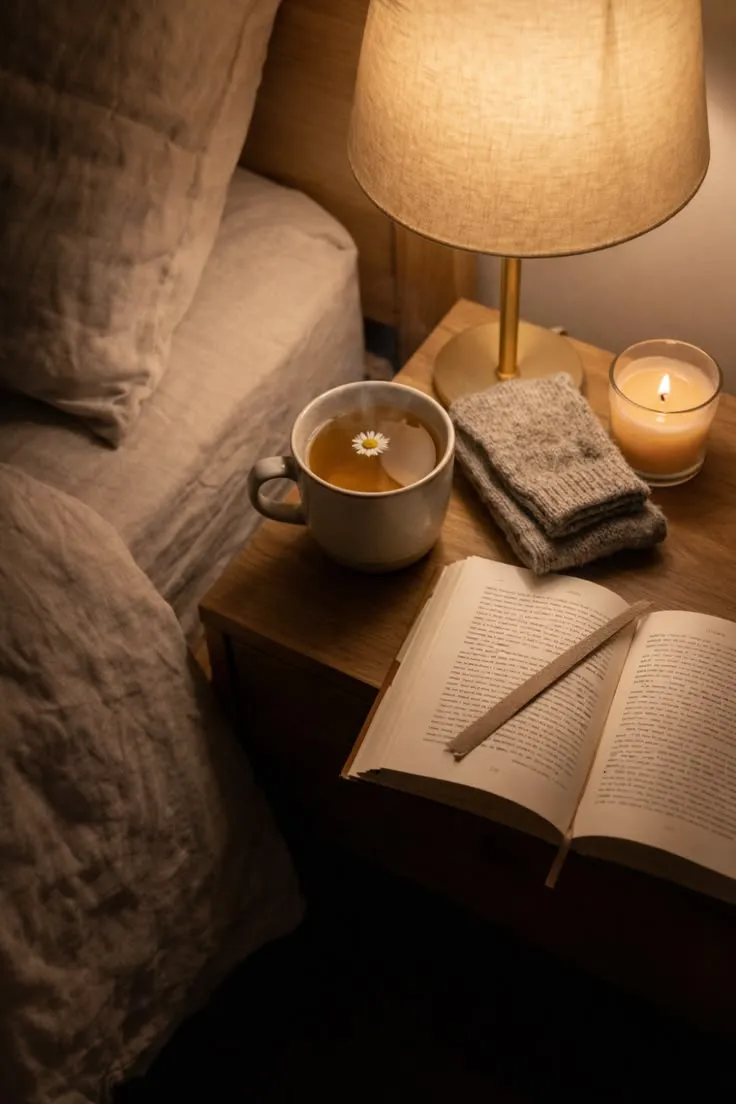
Position warm-toned lamps below eye level. Avoid overhead lighting within 60 minutes of intended sleep time.
-
Acoustic Control
Identify and address recurring noise sources. Consistent ambient sound can help mask unpredictable disturbances.
Quick Setup Checklist
Run through this list each evening to maintain a consistent sensory environment.
Before Sunset
- Adjust thermostat to preferred sleep temperature
- Close curtains or blinds to block external light
- Remove or cover bright indicator lights on devices
One Hour Before Bed
- Switch from overhead to bedside lamp lighting
- Start ambient sound if using audio masking
- Ventilate the room briefly if air feels stale
Complete Your Evening Setup
Combine environmental preparation with a structured wind-down timeline or evening journal session.